Ground Zero: How I Got Here
Fifty
First thing I notice at 50 is that I care less about my Mediterranean accent or how my thinking looks to others, and more about whether it survives scrutiny.
I'm a multidisciplinary, self-educated researcher with a background in art, filmmaking, and computer science. This content documents my transition into life-science research and a process of rebuilding my understanding of life from first principles—through observation, empirical evidence, and causal mechanisms—seeking coherence rather than accumulation.
This is not persuasion, selling, or pitching. It is documentation.
The Festival
So how did I get here?
I thought the peak of my career was founding an international film festival in 2020 in Israel and directing it through 2022—backed by respected peers, the Israeli Ministry of Culture and governmental film funds. I granted awards for excellence in fiction, documentary, animation, and experimental cinema. I was well-covered by the blanket of authority and credentials, well inside the system.
But life has its own dynamics.
The Illness
In 2022, in the middle of festival preparations, I got sick. Doctors could name the condition but not explain its cause or how to avoid it from reoccurring. So I did what I've always done: I researched it myself.
That began a journey into human metabolism, anatomy, physiology, microbiome research, and dietary science. I resolved it without medication or surgery—through logic, diet, and habit change.
But I was already deep in research. My questions got deeper. Each answer revealed more questions. Gaps in biology and life science started to appear—gaps that touched my core: curiosity.
Premed and War
That led me to sign up for premed. But then two things happened.
First, premed demanded memorization, not understanding. "Your questions will be answered later—just memorize." But the gaps and incoherence weren't addressed. They were somehow ignored, bypassed, covered with jargon.
Second, war broke out in Israel. Patterns I'd long observed became impossible to ignore. We had young children. We needed distance to keep them safe and think clearly.
By late 2023, with war escalating, we made the decision to leave. So we packed up and moved to a remote place in Thailand.
Scholē
In Thailand the research continued from an isolated place—submerged in greenery, far from Western noise, far from war. I understood that maybe I left school but I entered scholē—you know where the word "school" comes from? From the Greek word scholē, which means leisure. A place people went to reflect, to allow insights to come.
What of that is left in school's definition today?
Insights did come. Questions sharpened. Observations started aligning coherently.
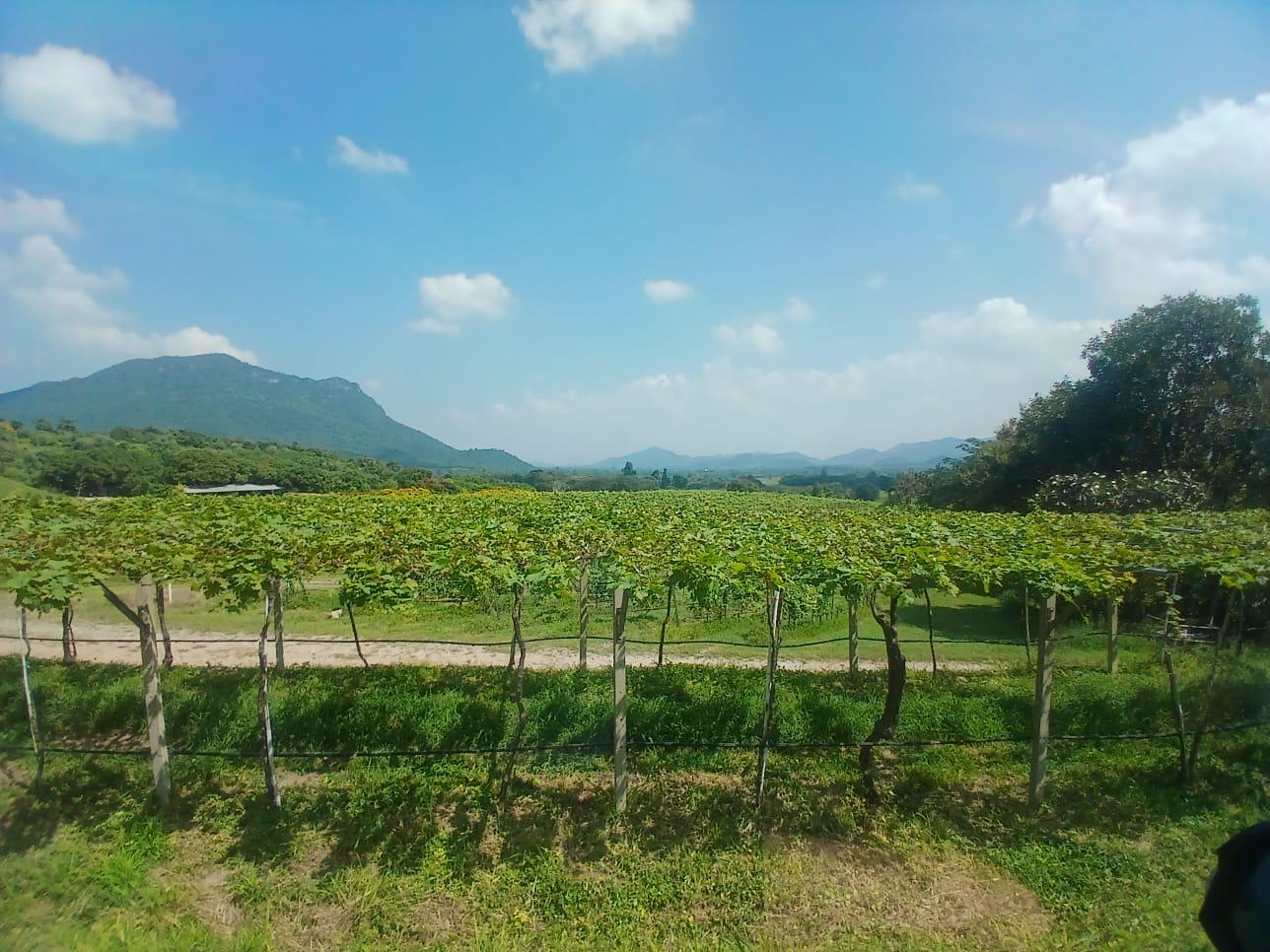
The Papers
I began documenting my observations in papers—one after another. Not ideas. Observations. Mechanisms. Causes under scrutiny I applied to myself.
The right thing to do was submit these papers to the most rigorous journals I could find—not to get published, but to be proven wrong.
None of them did.
Peer Review
Now that doesn't make the framework correct—but it does mean it was not rejected for being false.
Peer review is designed to surface errors—logical contradictions, empirical conflicts, clear counterexamples. None were identified explicitly. The critiques focused on framing, terminology, and how disruptive the ideas are relative to existing structures.
This is understandable, without any bitterness. Systems protect themselves from novel inputs—like any living system. I wrote a paper about that, actually. So who am I to complain?
Now, after a year of submitting papers, I can say the framework withstood direct attempts to expose internal contradictions or empirical refutation across multiple venues. I'm confident enough to invite you into my world—into a way of thinking from first principles.
What Life Does
This work did not begin by asking what life is made of, but by asking what life does. Instead of cataloging molecules or structures, I approached life the way one defines a character in storytelling: through selections under constraint—what we call behavior.
I observed living chemistry long enough to reduce it to its minimal operational form and to ask how that behavior differs from non-living chemistry and from apparent border cases such as viruses, spores, and dormant forms.
Once behavior became primary, those border cases stopped being ambiguous. Gaps closed. The story of life became coherent—and, crucially, consistent with observation.
From this process emerged a simple but powerful conclusion: life is filtering for self-continuation.
I invite you into these findings—not as a theory imposed from above, but as a framework that fell out of sustained, first-principles observation.
One last note before we dive in: Here, I'll use allegories, rhetoric, and simplification to help you understand what's in the papers—which are written in rigorous scientific language. If you're a researcher or reviewer looking for precise definitions and formal articulation, read the papers themselves.